Mendham Borough First Aid Squad
  • About Us
    • What We Do
    • Our Volunteers
    • MFAS FAQ
    • Squad History
  • Volunteer
    • How to Help
    • Cadet Program
    • Membership FAQ
  • Donate
  • Squad Resources
    • NJ EMT Training Fund Request
  • Contact Us
    • Get a File of Life

Questions? We've got a million of them...

1/27/2016

0 Comments

 
Well, not quite a million, perhaps. But a lot.

If you've ever had the need for an EMT's help, you've probably experienced the barrage of questions we ask. And we consider it a really good start when you're awake, alert, and able to answer those questions.

Before our EMT classwork can start to talk about interventions for specific injuries or illnesses, it's important for us to identify what, exactly, we're dealing with. And while it's often easy to get the basics when you have a conscious and lucid patient, that isn't always the case.

EMTs are drilled to take a specific step-by-step approach, called assessments, in order to ensure we first focus on critical life-threats, and then (and only then) identify and prioritize other issues our patients may be having. These assessments break down to the Primary Assessment (done when we first arrive on the scene), the Secondary Assessment (which may be done on scene, in the ambulance), and re-assessments as needed or warranted by the specific issues and interventions being undertaken.

At this point in my EMT course work, we're starting to practice these assessment skills, linking signs and symptoms to the knowledge of anatomy we've been learning, before we move and transport patients anywhere else. And it comes with learning a bunch of mnemonics, such as AVPU, SAMPLE/OPQRST, and DCAP-BTLS (just to name a few), to ensure we don't miss any critical information.

Read More
0 Comments

The head bone is connected to the neck bone....

1/25/2016

0 Comments

 
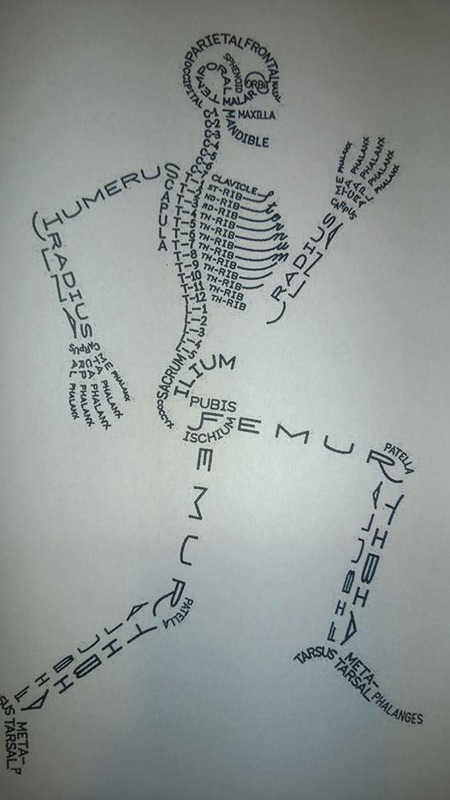
With the basics of the EMS system and moving/lifting skills under our belt, we turn our attention to perhaps the two most critical elements of the EMT course: Human anatomy and development, and the overall plan of patient assessment necessary to determine appropriate treatment and transport priority.

EMTs are not doctors. We're not asked, expected, or required to diagnose what ails our patient. Heck, we're pretty much told to avoid jumping to any conclusions, and look to treat life-threats and transport safely to a higher-level medical care facility as our primary responsibility.  While we may suspect kidney stones or gallstones, a broken toe, or an allergy to a specific food based on what a patient has told us they are experiencing by way of pain or discomfort, or what they were doing prior to the start of pain, at best we're told to maintain an "index of suspicion" rather than attempting to reach a conclusion and diagnoses. That's simply not the function of being an EMT.
Skeleton and bone names
The keys to providing effective care, however, requires us to understand human anatomy and how all the systems within our bodies both work and inter-relate. And while it is a major amount of stuff to learn, it's probably not much more than the average 8th grade health class or high school biology class.

Read More
0 Comments

We pick things up, we put things down...

1/18/2016

0 Comments

 
... and we try not to drop them along the way.

Two weeks of class are under my belt, and I'm feeling kind of good. There is certainly a lot of material being covered, and a whole bunch of practical exercises so we can practice skills until they become second nature. Ashley even described the practical exercises as "fun," even while they are designed to get you to think critically about patient care, teamwork and communication.

Picture
The first couple of lectures focused on the background of the Emergency Medical Service system(s) and how they are organized, plus legal aspects including privacy and documentation. 

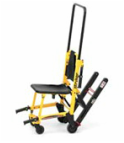
Practical skills focused on lifting and moving patients, and use of backboards, stretchers and stair chairs. The one from Striker Medical that we carry in our rigs is pictured here..


Read More
0 Comments

Class is in session!

1/5/2016

0 Comments

 
And so it begins, not with a whimper or a bang, but rather with a 2-and-a-half hour orientation session last night. 24 hopeful future EMTs, split about 50/50 between men and women, from squads around Morris, Union and Somerset counties.

I'm taking my EMT course through Atlantic Training Center at the Morris County Public Safety Academy in Parsippany, although there certainly are many other training organizations offering EMT courses in New Jersey.

The key message last night was pretty simple: Becoming an EMT is hard work. Be prepared to put in the time, study, practice and study some more. Classroom lectures, reading assignments, online lectures and quizzes, in-class written and practical exams... plus 10 hours of clinical rotation in a hospital emergency department or with the Mobile ICU (MICU, aka paramedics). Clearly, this is not something you can coast through with some last minute cramming.

One instructor explained that they weren't there to help us pass the course. Their goals were to turn out the best EMTs possible, and while they'd be more than happy to help us when we need it or when we ask for help, but ultimately this has to be something that we, as students, really wanted to succeed at.

The goal, as he explained it, was to teach us to "act, not react".

Read More
0 Comments

    Author

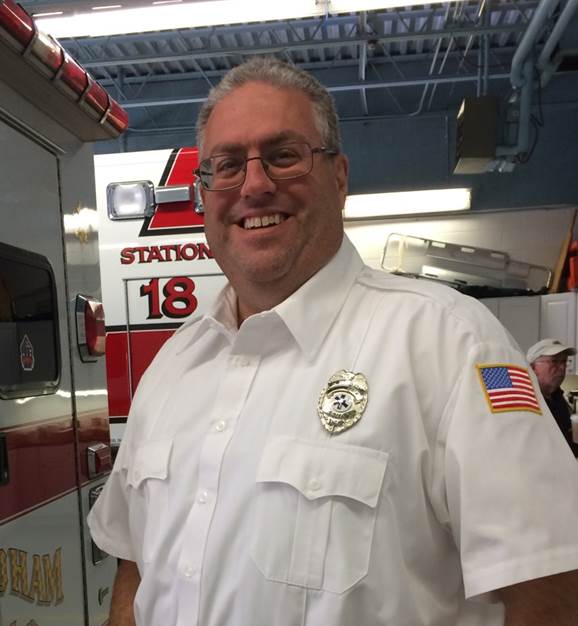
    Jon Alperin, one of our MFAS volunteers, shares his journey to becoming an NJ certified EMT.
    Picture

    from the Start

    Here is Jon's journey, presented in time order:
    • T-30 & counting
    • A look back at my first year with this squad
    • 1500 pages of EMT know-how
    • Class is in Session!
    • We pick things up, we put things down
    • The head bone is connected to the neck bone...
    • Questions? We've got a million of them...
    • Practice is vital, and vitals take practice
    • Getting ready for the 1st test
    • Taking a breather
    • Be still my beating heart
    • Gearing up for mid-term exams
    • A peak inside a PSAP
    • Urgency, not emergency
    • Paramedics - Our partners in success
    • Under pressure
    • Around the bend, the end is in sight
    • From beginning to end
    • A grim way to learn
    • The toughest lesson
    • One behind, one ahead
    • Tom Petty had it right...
    • Just gonna let this speak for itself
    • The end of the beginning

    Archives

    June 2016
    May 2016
    April 2016
    March 2016
    February 2016
    January 2016
    December 2015
    November 2015

    Categories

    All
    Anatomy
    Assessments
    Cadet Members
    Cardiac
    Certifications
    Childbirth
    Circulation
    CPR
    C Spine Precautions
    C-Spine Precautions
    Dispatch
    EMT Classes
    EMT Skills
    Fire Rehab
    Geriatrics
    Illness
    Mechanism Of Injury (MOI)
    Medical Emergencies
    Motivation
    Nature Of Illness (NOI)
    Nervous System
    Operations
    Pediatrics
    Respiration
    Safety
    Terminology
    Trauma
    Vital Signs
    Volunteering

    RSS Feed

    Find us on Facebook
    Facebook.com/MendhamFAS
PO BOX 131/24 E Main Street, Mendham NJ 07945
​© 2023 Mendham First Aid Squad. All rights reserved. 

Home    Volunteer    Donate    Contact 

  • About Us
    • What We Do
    • Our Volunteers
    • MFAS FAQ
    • Squad History
  • Volunteer
    • How to Help
    • Cadet Program
    • Membership FAQ
  • Donate
  • Squad Resources
    • NJ EMT Training Fund Request
  • Contact Us
    • Get a File of Life